
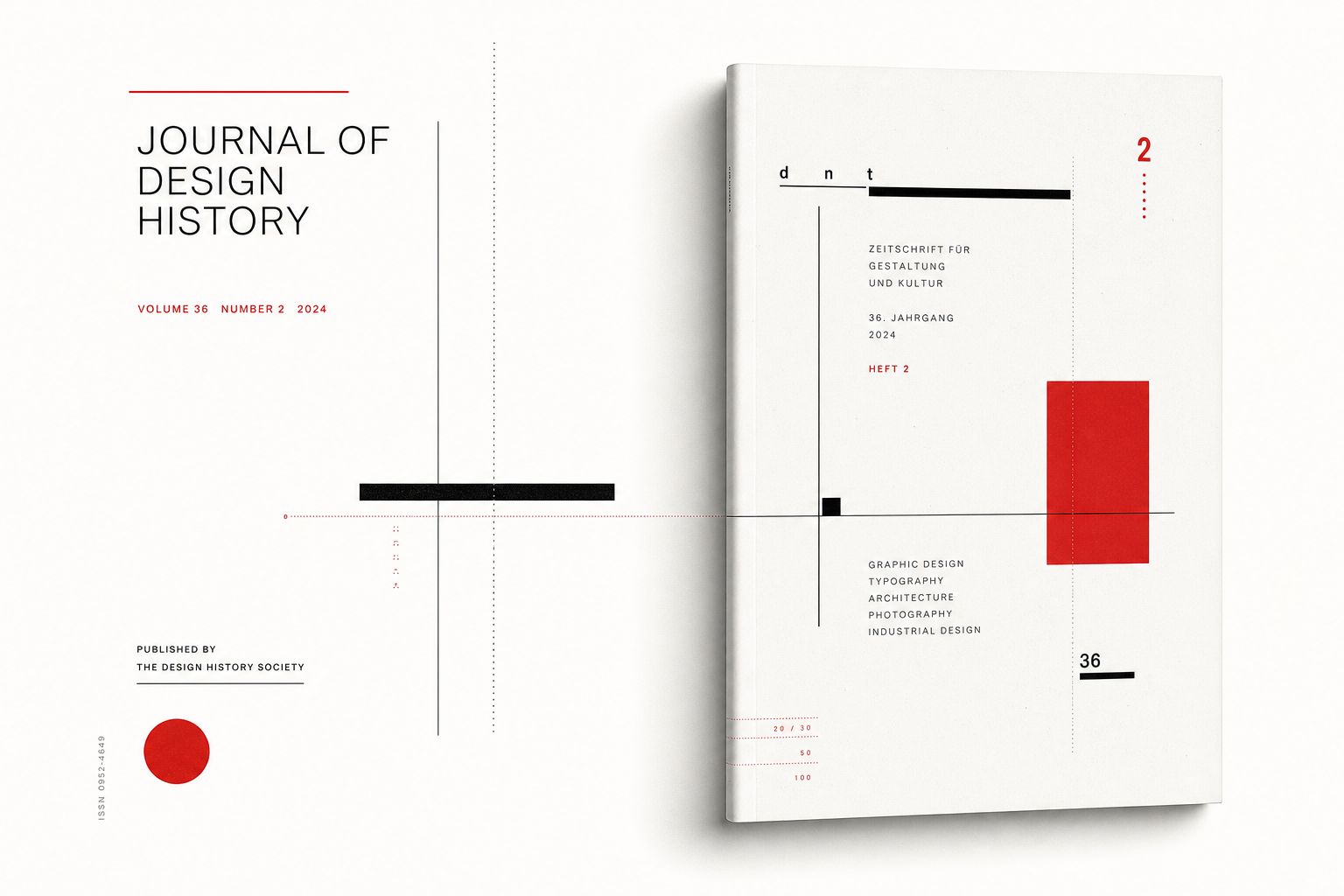
Die neue Typographie matters to Reetro because a book about design turns here into a highly deliberate printed object in its own right. Open Library lists the 1928 edition as ein Handbuch für zeitgemäss Schaffende, published in Berlin by the Bildungsverbandes der Deutschen Buchdrucker, and records it at 240 pages. Even those bibliographic facts suggest that the book was conceived not as free-floating theory but as a practical working form for the world of print.
A Berlin trade book with unusually clear material facts
The Open Library edition is strikingly concrete. There, Die neue Typographie appears explicitly as a 1928 edition, published in Berlin by the Bildungsverbandes der Deutschen Buchdrucker, with a length of 240 pages. Its subtitle, ein Handbuch für zeitgemäss Schaffende, positions the volume not as loose polemic but as a handbook for practitioners. That proximity to the workshop is what makes the object especially relevant for Reetro: modern typography is presented not as abstraction, but as printable order.
Asymmetry instead of the centred page
Wikipedia summarizes the book as a manifesto of modern typography and condenses its main program clearly: Tschichold argues against the traditional centred page and for asymmetrical composition, standardized paper sizes, sans-serif type, and the active use of photography. For Reetro, the important point is less the canon than the consistency. The book treats page, white space, hierarchy, and image not as separate problems, but as one economical surface.
Why the publisher line matters
The publisher line is not a trivial detail. When a book of this intensity is issued by the educational association of German printers, its argument sits close to the production side of print. That matches the effect of the title itself: Die neue Typographie is not just a style slogan, but an attempt to reorganize composition, format, and reading movement. The data trail at Open Library and the German National Library still makes the object unusually legible today.
Why it fits Reetro
Die neue Typographie fits Reetro because strictness and lightness meet on the same page. Generous paper-white space, clear axes, calm sans-serifs, and an eye that is guided across the spread rather than trapped in ornament. If that sensibility appeals to you, it often leads to precise posters or graphically restrained framed pieces where proportion and rhythm matter more than nostalgia alone. As a 1928 book, Die neue Typographie remains a strong example of how modern print can feel when form and argument lock together exactly.