
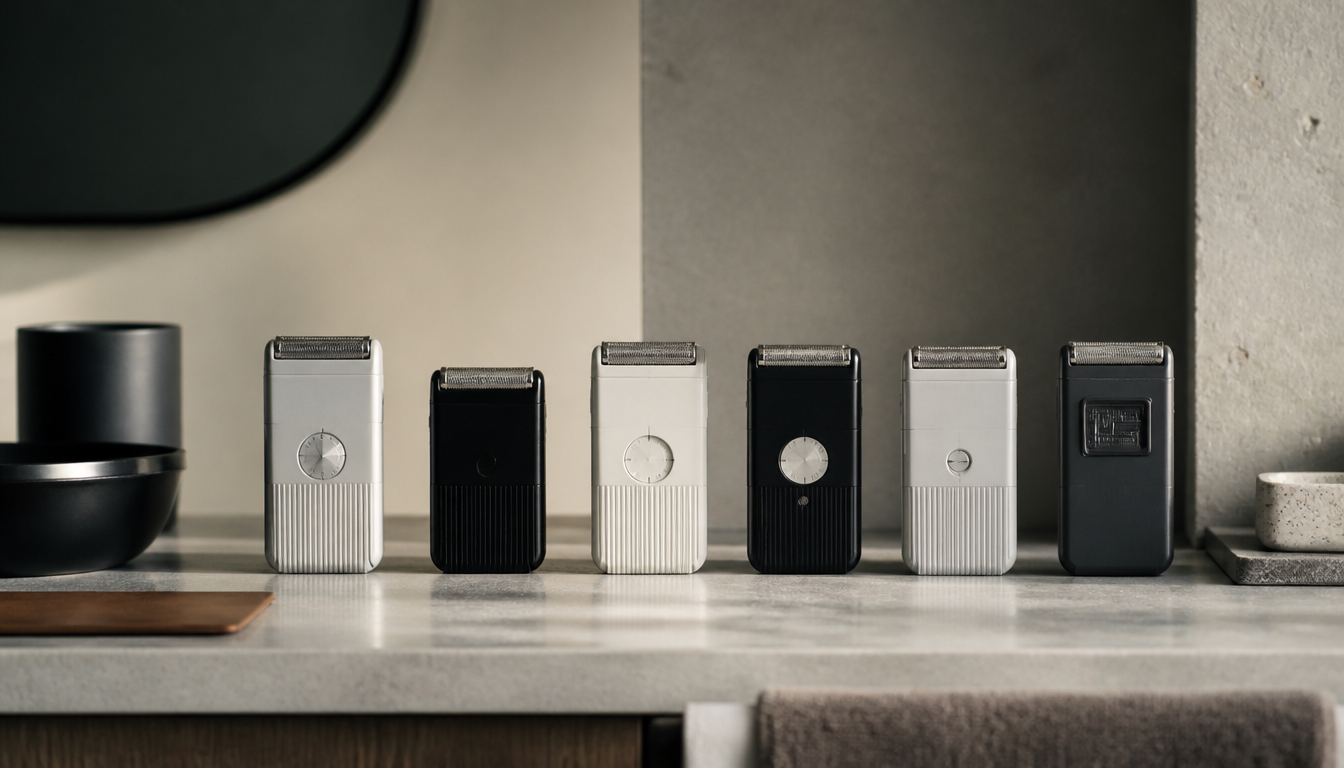
Dieter Rams, born in 1932 in Wiesbaden, shaped the design of Braun electric shavers from the early 1960s onwards with his principle of “Less, but better” – setting a standard that became the blueprint for functionalist product design worldwide until 1980. Rams’ principle of reduction was not a stylistic device but an attitude: every superfluous form was eliminated, every function remained visible. That is precisely what makes Braun shavers from this period sought-after collector’s items today. Anyone who holds one in their hands immediately understands why Rams called “indifference towards people” the only true design sin.
Braun Electric Shavers: How Dieter Rams’ “Less, but Better” Became a Collector’s Icon
Dieter Rams, born on 20 May 1932 in Wiesbaden, shaped a design language as an industrial designer at Braun that continues to resonate to this day. His guiding principle “Less, but better” was not a marketing slogan but a genuine programme: “Good design for us means as little design as possible”, Rams himself stated. For the electric shavers produced under his influence between 1962 and 1980, this meant: no superfluous curves, no decorative additions, only what was necessary in the best possible form.
The Key Fact: Reduction as an Attitude, Not a Cost-Cutting Measure
Rams was unequivocal: he did not choose simplicity for economic reasons. He described complex, unnecessary forms as “designers’ escapades” serving self-expression rather than product function. The Braun shavers of that era, including the T-41 from 1962, are committed to this attitude. Clean housings, thoughtful ergonomics, materials without frills. That is precisely what makes them interesting for collectors today: they are legible, timeless and functional all at once.
What This Means for You as a Buyer or Collector
1. Prioritise quality over year of manufacture Rams emphasised longevity as the core of good design. The Braun shavers from this period were explicitly designed against the trend of planned obsolescence. Anyone looking for a model from the 1960s to the 1980s should pay attention to the condition of the housing and the shaving head mechanism, not just the year of manufacture. Working devices are more telling than mere display pieces.
2. Original packaging and accessories increase collector value Because the Braun aesthetic of that era was consistently designed around unity, the case, cleaning brush and original box are all part of the complete picture. Missing parts can often be identified on heavily restored devices by imitation surfaces that do not match Rams’ characteristic austerity.
3. Know the design history context Braun was founded in 1921 by engineer Max Braun. When his sons Artur and Erwin took over in 1951, Artur Braun recognised the potential of progressive design thinking in the post-war consumer goods market. Rams came to prominence in this environment. Anyone buying a Braun device from the period 1962 to 1980 is also buying this specific moment in design history.
4. Rams’ aesthetic as an interior design inspiration The shavers look great on a shelf or sideboard because they formally harmonise with what we today understand as “Bauhaus thinking”: geometric, functional, free of nostalgic kitsch. Those who wish to extend this look into their living space will find suitable complements at reetro: for example the Bauhaus Exhibition Poster or the Bauhaus Sun Poster, which breathe the same formal spirit. The Decorative Cushion in Bauhaus Style or the Bauhaus Hexagon Picture also suit an interior that takes Rams’ maxim seriously.
Anyone looking for more vintage design pieces is best served by browsing the reetro Shop directly or the Sale selection.
Sources
- Dieter Rams – Wikipedia
- How Dieter Rams Transformed the Design Landscape With Braun’s Less-Is-More Ethos – Interior Design, 26 September 2018
- The Brains and Braun of Designer Dieter Rams – Encyclopedia Design, 11 November 2021
FAQ
Who is actually behind the iconic design of Braun electric shavers from the 1960s and 70s?
That is Dieter Rams, born on 20 May 1932 in Wiesbaden. He is the driving force behind the functionalist design approach that Braun championed during this era. His credo ‘Less, but better’ was not a marketing slogan but a serious working principle: everything superfluous was eliminated so that the essential could come across all the more clearly.
What makes Braun shavers from this period collector's items today?
Rams understood design quality as durability, not as a passing trend. He actively rejected planned obsolescence and designed products intended to be functionally and aesthetically long-lasting. That is precisely what makes devices from the years 1962 to 1980 so appealing to vintage collectors: they do not look dated today, but timelessly reduced.
What does 'as little design as possible' actually mean in the context of an electric shaver?
Rams put it himself: ‘Good design for us means as little design as possible. Not for reasons of economy or convenience.’ Translated to a shaver, this means: no decorative elements, no attention-seeking forms, only lines and surfaces that arise directly from the function of the device.
Did Braun develop this design approach itself, or did it come from outside?
The decisive impetus came when Artur and Erwin Braun took over the company in 1951, which had been founded by Max Braun in 1921. Artur Braun recognised the market potential of progressive design thinking in the burgeoning post-war consumer electronics market. Dieter Rams then provided the design consistency that turned Braun into a design reference.
Is it still worth buying an original Braun shaver from this era?
As a collector’s item, absolutely. Rams’ principle of durability was not a promise he made lightly: the devices were designed for longevity, not rapid wear. Anyone who finds a well-preserved example from the period 1962 to 1980 holds in their hands a piece of applied design history that makes Rams’ ten principles of good design directly tangible.
This article was generated automatically by an AI system. Disclosure pursuant to Article 50 of the EU AI Act.