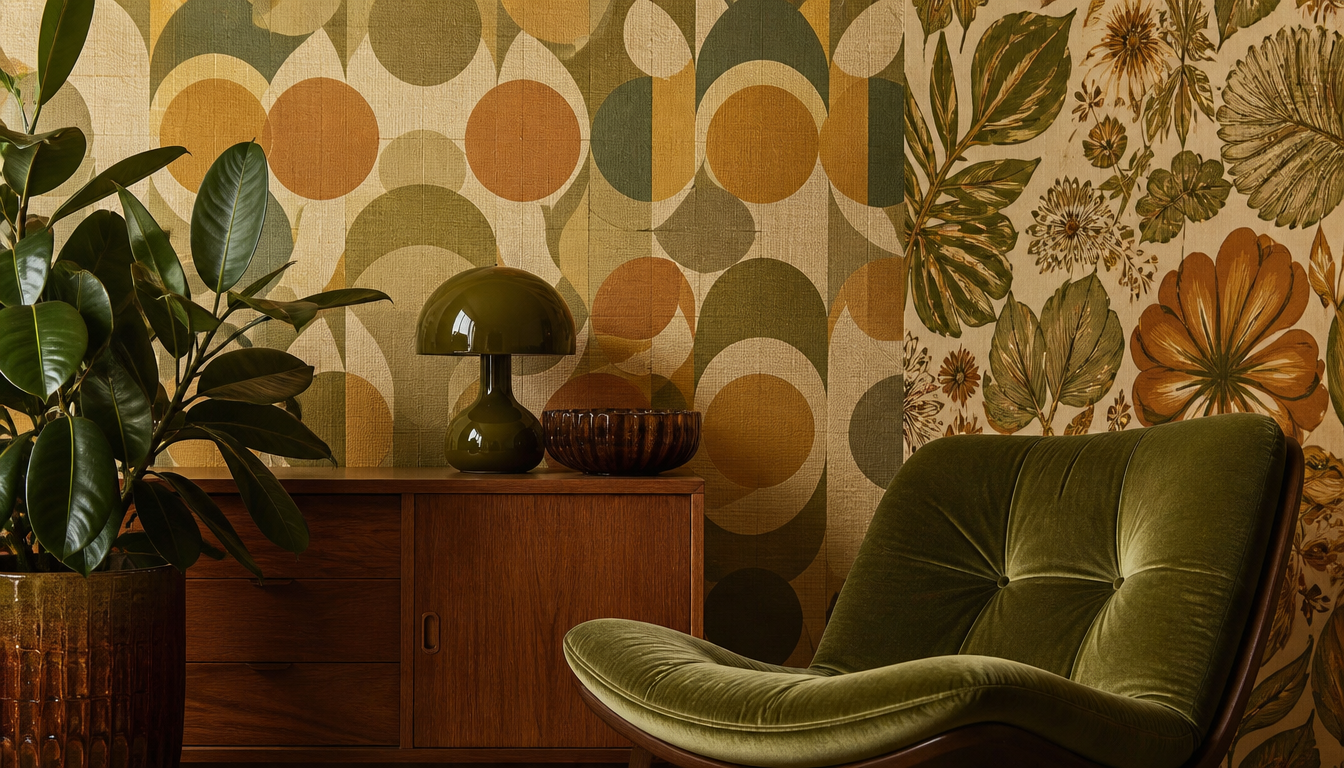
Over 138,000 archived motifs prove it: The geometric and botanical wallpaper patterns of the 1970s are experiencing a massive revival right now, driven by interior trends such as maximalism, eclecticism, and dopamine décor. What was once psychedelic consciousness expansion on paper is hanging on our walls again today. Bright neon colors, twisting plant tendrils, and hypnotic geometry are no longer a retro gimmick but a genuine style-mix expression of our time. If you want to understand where the pattern on your favorite sneaker sole, your vintage shirt, or your accent wall really comes from, the trail leads straight back to the wild Seventies.
1970s Wallpaper Patterns: Geometry, Botanics, and the Trip on the Wall
Vibrant colors, sweeping shapes, rampant foliage ornaments: the psychedelic wallpaper is making a real comeback, according to a recent report by Bricoflor from May 2025. Interior trends such as maximalism, eclecticism, and the so-called dopamine décor are making it socially acceptable once again to embrace neon colors, bold patterns, and a daring style mix. The ’70s provide the perfect blueprint for exactly that.
What Makes a Pattern Psychedelic?
In the Seventies, the answer was simple: anything that keeps the eyes busy and makes the head spin a little. Geometric shapes such as circles, spirals, and honeycombs alternated with lush botanical motifs — monstera leaves, palms, fern fronds. The contrast between rich background colors and luminous foregrounds created that optical effect that makes the decade iconic to this day.
Bricoflor describes this very effect using the example of a Versace wallpaper in an ’80s style: a floral design in neon colors on a black background appears “mystical and intoxicating” thanks to the contrast and the detailed vinyl texture. The underlying principle is the same as with classic ’70s patterns: color against dark, nature against form.
4 Practical Ideas for Your Home
1. Botanics as Wall Art Instead of Wallpaper Anyone who doesn’t want to paper their walls can bring in the plant feeling with a single large-format print. A Peach Botanics Poster or a Lavender Botanics Poster works as a focused accent without overwhelming the room. Those who prefer something more lavish can opt for the Rousseau Dream Poster, which delivers tropical botanics straight in art print quality.
2. Geometry with Hexagon Wall Art The hexagon was already a favorite shape in ’70s wall design. Today, this aesthetic can be achieved with individual hexagon panels — no need to re-wallpaper the entire wall. The Boho Pattern Hexagon or the Bauhaus Hexagon Picture pick up the geometric logic of the decade without looking like a museum piece. For botanical hexagon variations, the Monstera Hexagon Wall Art or the Colorful Leaves Hexagon Wall Art are great options.
3. Neon Accents via Cushions Anyone who wants to try out the psychedelic color tone in a measured way can do so most easily through textiles. A Neon Cushion or the Decorative Cushion Neon brings the characteristic luminous hue into the living room without touching the walls. The Decorative Cushion Fluid Lights also picks up on the fluid, interlocking play of shapes that is typical of psychedelic ’70s graphics.
4. Yayoi Kusama as a Reference on the Wall Anyone who wants to see the bridge between psychedelic aesthetics and contemporary art should take a look at Yayoi Kusama’s dot and flower motifs. The Yayoi Kusama Flower Poster and the Kusama Pumpkin Print make exactly this connection visible: repetition, intensity, nature motif. The Kusama Mousepad with Flower Pattern also works as a smaller statement on the desk.
You can find the full reetro shop with more retro prints and wall décor at /de/shop.
Sources
- Psychedelic Wallpaper: 10 Intoxicating Wall Coverings – Bricoflor Blog (2025)
- 70s Psychedelic Art – Pinterest Idea Collection
- Psychedelic 70s Stock Images – Adobe Stock
FAQ
What typically makes a wallpaper pattern from the '70s so unmistakable?
The combination of bright neon colors, strong color contrasts, and intricate botanical or geometric patterns is what makes ’70s wallpapers so unique. Floral designs often appeared mystical and intoxicating rather than naturalistic, thanks to their psychedelic color palette. That was deliberate aesthetics — not coincidence.
Why did designers of the '70s so often draw on botanical motifs?
Botanical motifs such as flowers and plants represented the counterculture’s longing for nature. At the same time, they were transformed into something hallucinatory through intense colors and abstract exaggeration. Nature as a trip, so to speak. The color contrast was key: neon blossoms on a black background created a psychedelic effect that a matter-of-fact beige could never have delivered.
Are psychedelic wallpaper patterns in vogue again today?
Yes, and quite noticeably so. Interior trends such as maximalism, eclecticism, and the so-called dopamine décor are bringing bold designs, neon colors, and style mixes back with a vengeance. Bright colors and unusual patterns are once again in high demand in wall design. Psychedelic wallpaper is particularly sought after.
What role did geometric patterns play alongside the floral motifs?
Geometric shapes provided the second major pillar of psychedelic interior design in the ’70s. While botanical patterns catered to the longing for nature, repeating geometric structures created optical depth and a consciousness-expanding pull. Both together produced the typical style mix — the eclecticism — that is being revisited today as a retro reference.
How can the psychedelic '70s look be achieved in your own home today without going overboard?
A single accent wall with a bold pattern is often all it takes. Choosing bright neon colors on a dark — for example black — background achieves the era’s characteristic color-contrast effect. Detailed, shimmering surfaces such as vinyl further amplify the intoxicating look. The rest of the room can remain calm — that’s when the psychedelic accent works best.
This article was generated automatically by an AI system. Disclosure pursuant to Article 50 of the EU AI Act.