
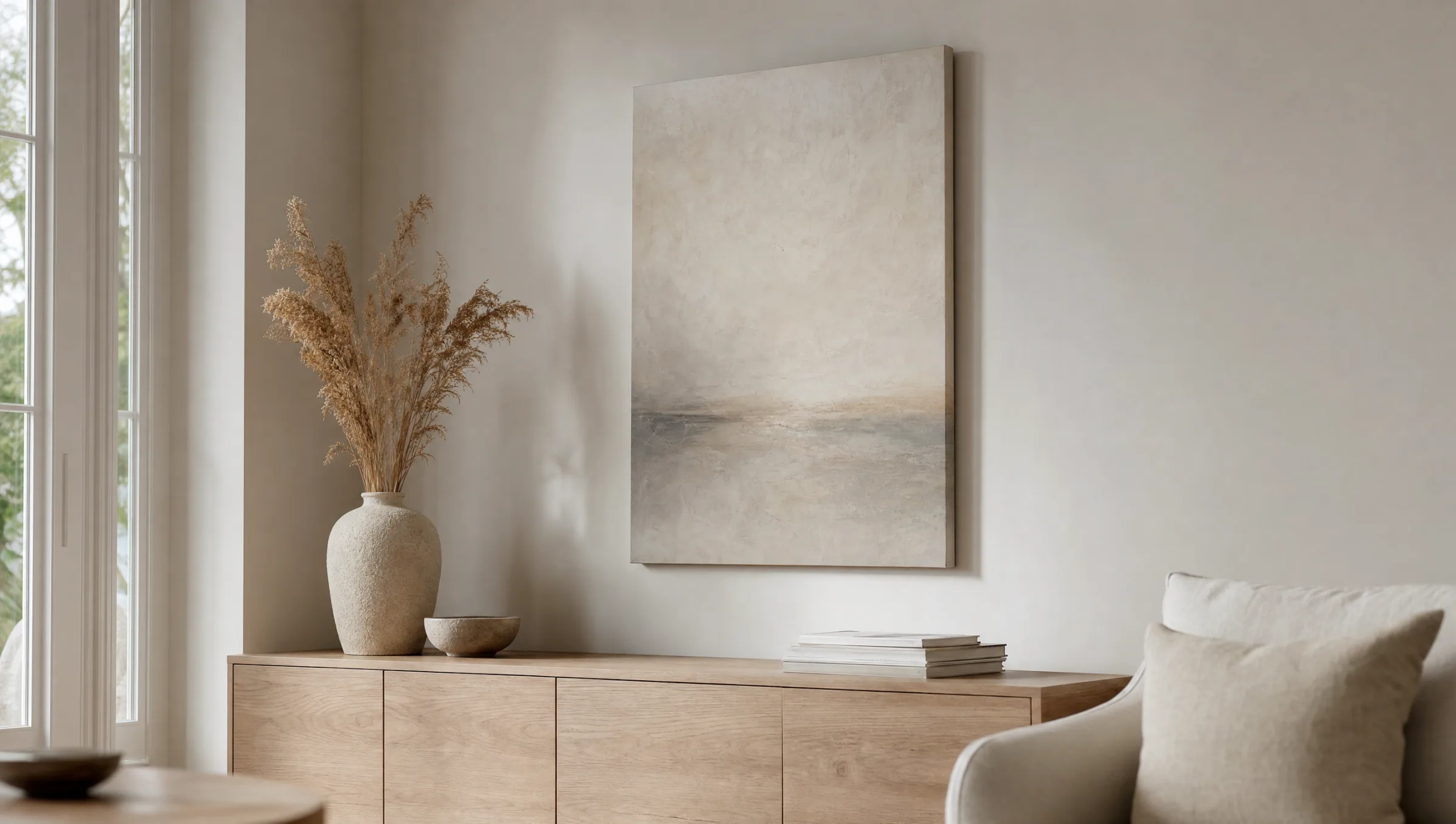
Canvas Print 60x80: the mid-size portrait format in editorial focus
The 60 × 80 cm format is one of the most frequently chosen sizes in the world of stretched canvas prints. It is large enough to anchor a wall, yet compact enough to integrate into existing picture arrangements. This page offers an editorial look at the format, subject choice, hanging position and material considerations.
Why a canvas print 60x80 works so well
The canvas print 60x80 sits in a range that many interior designers describe as a 'mid-size portrait format'. It reads as present without being dominant, and fits equally well above a sideboard or on a narrower wall section beside a door or window. At a 3:4 ratio it remains compositionally calm and harmonises with classic photographic proportions.
Compared with a landscape format of the same dimensions, the portrait orientation appears slimmer and takes up less visual width. This makes the format particularly useful in hallways, stairwells, narrow wall segments between pieces of furniture, or above chairs in a dining room. A canvas print 60x80 also works as a reliable anchor point in an asymmetric salon-style arrangement.
Subject categories that carry well in the 60x80 canvas print format
Not every subject works equally well in every format. The following categories have proven editorially reliable in this mid-size portrait orientation.
Botanical studies
Single leaves, grasses or branches benefit from the portrait format because their upward growth reads naturally. Light backgrounds keep the image understated.
Portrait and figure photography
Classic portrait-format shots from analogue photography translate directly into 60×80. Black-and-white works feel calm and focused at this mid-range size.
Architectural details
Columns, staircases or facade sections with vertical lines gain structure from the portrait orientation. Well suited to minimalist interiors.
Abstract colour fields
Flat compositions in muted tones work in 60x80 because the format is large enough to let colour read as space without overwhelming the room.
Hanging height and placement in the room
As a general rule, the centre of a canvas print 60x80 should sit at roughly eye level for a standing person — around 145 to 155 cm from the floor. Above furniture such as sofas or sideboards the picture moves closer; a gap of 15 to 25 cm between the top of the furniture and the bottom of the canvas tends to look balanced in most domestic settings.
In dining rooms where viewers are mostly seated, the picture centre may sit a little lower. In hallways or rooms with very high ceilings, the format can be arranged as part of a vertical grouping with a smaller work above or below it. The key is to ensure that the portrait canvas does not disappear in isolation between large horizontal pieces of furniture.
A portrait format in the mid-range is the most honest size — large enough to be noticed, small enough not to perform.
Reetro editorial
Material, stretcher frame and print quality for a canvas print 60x80
For a canvas print 60x80, the combination of fabric, stretcher frame and print determines how the work holds up over the years. Quality canvases are made from tightly woven cotton or cotton-polyester blended fabric with a weight of around 350 g/m² or more. Lighter fabrics tend to warp with changes in temperature and humidity.
The stretcher frame should be made from solid FSC-certified pine and include a cross-brace once the longer side reaches 80 cm. A depth of roughly 2 to 4 cm is standard; deeper bars give a more gallery-like appearance, while shallower ones integrate more discreetly into picture groups.
For the print itself, pigment-based inks hold a clear advantage over dye-based alternatives because they are significantly more light-resistant. A matte protective coating reduces reflections from angled light and shields the printed surface from mechanical stress during cleaning. Reetro canvas prints are printed to order by our production partner in the EU with these criteria in mind.
Care and longevity
A canvas print 60x80 requires little maintenance in everyday use: dust regularly with a dry, soft cloth or a clean brush. Wet cleaning, glass cleaners or microfibre cloths with active agents should be avoided, as they can dull the protective coating.
Direct sunlight for several hours each day accelerates fading regardless of the print method used. Anyone placing a canvas on a south-facing wall should opt for UV-stable pigment inks and, if necessary, consider light curtains or shading to protect the surface.
Häufige Fragen
-
01
How much wall space does a canvas print 60x80 require?
For a canvas print 60x80 to have room to breathe, the surrounding free wall space should allow roughly 20 to 30 cm of clearance on each side from adjacent furniture, doors or other frames. In practical terms, a wall section around 100 cm wide and 130 cm tall provides enough space for the portrait format to read calmly. In narrower spaces the canvas may fit physically, but can quickly feel hemmed in.
-
02
Is a canvas print 60x80 suitable for a bedroom above the bed?
Above a double bed 140 to 180 cm wide, a single canvas print 60x80 often reads as slightly too small because it tends to disappear in proportion to the bed's width. It works better there as a pair side by side, in a group of three, or as part of a mixed picture wall with smaller formats. Above a narrower single bed, or positioned beside the bed as a solo piece, the format performs very well.
-
03
Which subjects suit a canvas print 60x80 best?
The format is open to many subject types, but shows particular strengths with vertically composed content: botanical studies, portraits, architectural details with upward lines, and abstract colour fields with a restful structure. Landscape-oriented subjects often feel cropped and lose depth on a portrait canvas. Before transferring any image to this format it is worth checking whether the original composition was conceived vertically.
-
04
How high should a canvas print 60x80 be hung?
A reliable guide is the eye level of a standing person: the centre of the canvas ideally sits between 145 and 155 cm from the floor. Above furniture, measure up from the piece instead — a gap of 15 to 25 cm between the top of the furniture and the bottom of the canvas tends to look balanced in most living spaces. In dining rooms or seating areas the centre can be set a little lower so that it sits comfortably in the sightline when seated.
-
05
How does a canvas print differ from a framed poster in the same format?
A canvas print displays the image directly on textile fabric stretched over a wooden frame. The fabric texture gives it a softer character and it can be hung without any additional frame. A framed poster on paper reads as more graphic, renders fine detail more crisply, and draws much of its presence from the interplay between frame and mount. Which option suits better depends on the subject, the interior style, and the visual weight you want the piece to carry on the wall.
-
06
What should I look for when buying a premium canvas print 60x80?
Three points matter most: a tightly woven carrier fabric with sufficient weight, a solid stretcher frame from FSC-certified wood with a cross-brace at this size, and a pigment-based print with a matte protective coating. Reetro produces canvas prints 60x80 along exactly these lines — printed to order by our production partner in the EU, with colour-stable pigment inks, cleanly finished corners, and timber from sustainably managed forests. This noticeably extends the working life of the canvas compared with standard-market alternatives.