Portrait Format Print – Sizes, Effect and Hanging Tips
Hanging a portrait format print changes the feel of a room in a noticeable way: the eye follows the vertical line, ceilings appear higher, and narrow wall sections are put to good use. This page explains sizes, proportions, and practical layout rules for the portrait orientation.
What is a portrait format print – and why does the orientation work so well?
A portrait format print is one whose height is greater than its width – the opposite of landscape orientation. Where landscape prints convey calm and breadth, portrait prints draw the eye upward and create a noticeably more dynamic, upward-reaching effect in a room.
This quality makes portrait orientation especially useful for walls that are limited in width: alcoves, hallways, stairwells, or the narrow strip of wall between two doors. A single portrait format print in such a spot can be enough to give the room a clear visual focal point without overcrowding the surface.
The portrait format also develops its appeal within the composition itself. Architectural photographs featuring long façade lines, botanical illustrations with slender stems and leaves, portraits, and abstract works with vertical brushstrokes – all of these gain expressive force in a portrait format print, because the orientation picks up and reinforces the inner dynamic of the subject.
Common sizes for a portrait format print at a glance
Portrait format prints come in a wide range of standard sizes. The overview below shows common dimensions, their typical proportions, and what they are best suited for.
50 × 70 cm (5:7)
One of the most popular portrait format print sizes for the home. The 5:7 proportion feels balanced and fits many wall situations – from a bedroom wall to a living room accent.
61 × 91 cm (2:3)
The classic poster size. At a 2:3 ratio it matches the exact proportions of a 35 mm photograph, making it well suited to posters with photographic subjects or typographic prints.
70 × 100 cm (7:10)
A large portrait format that makes an impact on high walls or as a statement piece in hallways and stairwells. The surface area is sufficient to keep even detailed illustrations clearly legible.
A4 (21 × 29.7 cm) and 30 × 40 cm
Smaller portrait format prints that work well on gallery walls. They can be layered with other sizes and are particularly useful where the eye should be drawn to detailed motifs.
Hanging a portrait format print – height, spacing, and composition
Hanging height is decisive for the effect of a portrait format print. The general guideline is that the centre of the print should sit at eye level, which in living spaces typically falls between 145 and 160 cm above the floor. In rooms with very high ceilings the print may hang slightly higher, but it should never be so high that it loses its connection to seated or standing eye level.
When several portrait format prints hang side by side, an even horizontal gap of 5 to 10 cm between the frames is recommended. The top edges or centre axes can be aligned along a shared line – which option looks more harmonious depends on the subject type and frame size. With prints of differing heights, aligning along a shared centre axis is often the calmer solution.
When a portrait format print is placed as a single piece, its size should be proportional to the available wall space. A rule of thumb: the print should occupy between 60 and 75 percent of the width of the wall it hangs on. A print that is too small on a large wall looks lost; a print that is too large on a narrow surface creates an overbearing impression.
The portrait format follows the natural upward orientation of the human gaze. It does not need a large surface to define a room – it only needs the right wall.
Editorial note, Reetro
Subjects and styles that work particularly well as portrait format prints
Not every subject benefits equally from portrait orientation. Architectural shots in which towers, trees, or columns dominate the frame use the vertical alignment naturally. The same applies to portrait photography, botanical prints with slender plant forms, and abstract compositions that work with lines, stripes, or gradients running top to bottom.
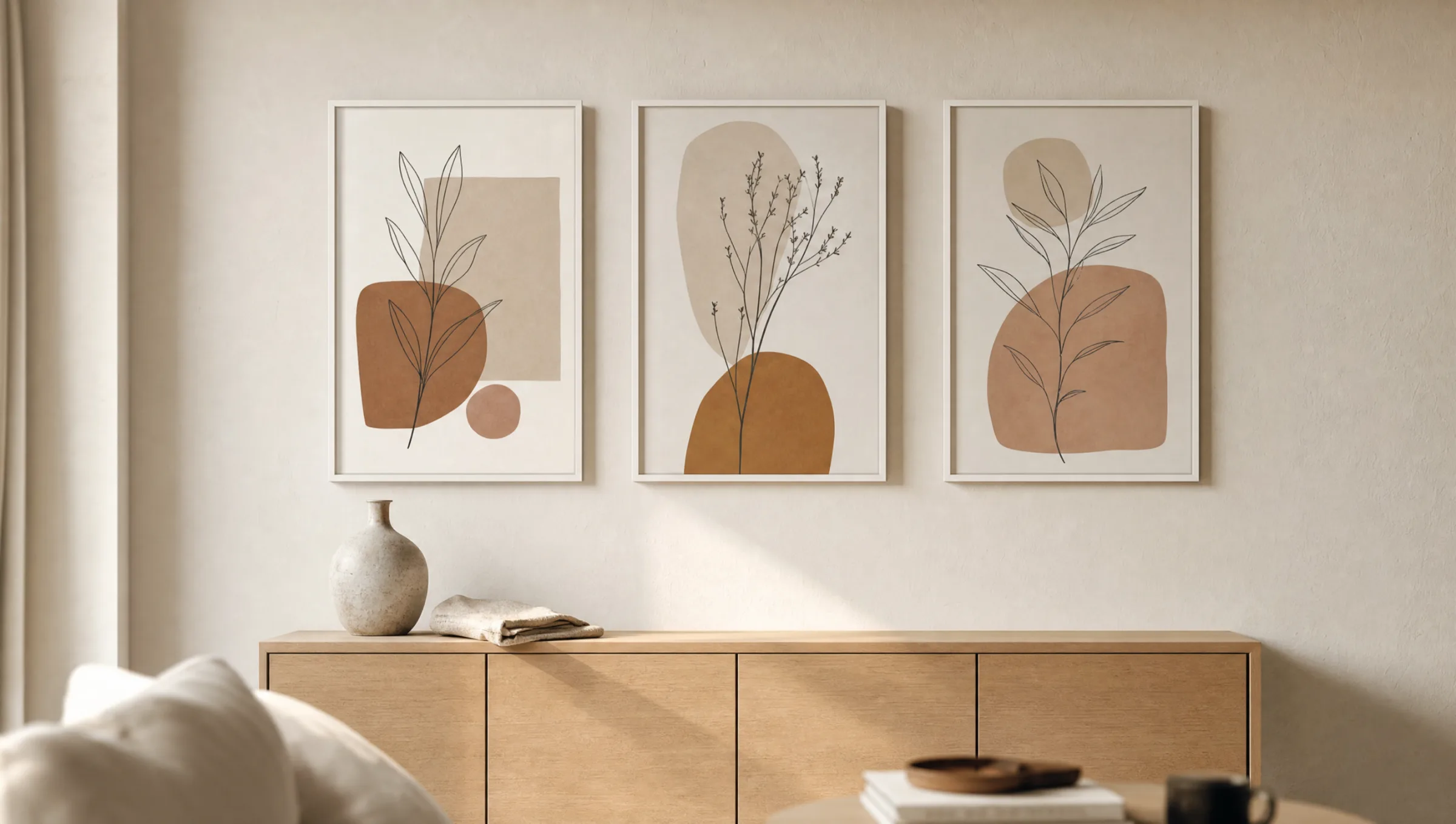
In contemporary illustration, portrait format prints with minimalist motifs – a single branch, a geometric shape, a spare line of text – are especially common. They work well in series: three identically framed portrait format prints side by side create a calm, considered effect without any complex arrangement.
Typographic posters in portrait orientation often make deliberate use of the vertical space: multi-line quotes, lines of poetry, or sequences of numbers read more coherently in portrait format than in landscape. Here, reading direction plays a direct role in the visual design.
Materials and surfaces for portrait format prints at Reetro
Reetro offers portrait format prints on FSC-certified papers from 200 g/m² with a matte coating. The matte surface reduces light reflections – a practical advantage when a portrait format print hangs in a hallway or stairwell where light falls from varying angles. For particularly prominent locations, canvas prints and aluminium wall panels in hexagonal formats are available; these require no frame and allow for a more pared-back aesthetic.
All prints are printed to order close to the customer, in the EU or the US, which keeps delivery routes short and ensures consistent quality control. For portrait format subjects, Reetro recommends the 50 × 70 cm and 61 × 91 cm sizes as a starting point, since these proportions scale well in most living spaces and are designed for standard off-the-shelf frames.
Häufige Fragen
-
01
What exactly is a portrait format print?
A portrait format print is a print oriented vertically – meaning its height is greater than its width. The opposite is landscape orientation. Portrait format takes its name from its historical use in painted portraiture, but today it is applied across posters, photographs, illustrations, and canvas prints. The orientation draws the eye upward and works particularly well on narrow wall surfaces.
-
02
What standard sizes are available for a portrait format print?
Common portrait format print sizes for the home include 50 × 70 cm (5:7 ratio), 61 × 91 cm (the classic poster ratio of 2:3), and 70 × 100 cm for larger wall areas. Smaller sizes such as A4 (21 × 29.7 cm) or 30 × 40 cm suit gallery walls. The choice should be guided by the available wall width and the intended viewing distance.
-
03
At what height should a portrait format print be hung?
As a general guide, the centre of the print should hang at eye level – approximately 145 to 160 cm above the floor. In rooms with very high ceilings or when hanging above a piece of furniture, the position can be adjusted accordingly. For a gallery wall featuring several portrait format prints, aligning along a shared centre axis or a common top-edge line will produce the most settled result.
-
04
Which subjects suit a portrait format print best?
Subjects with strong vertical elements work best in portrait orientation: architectural shots featuring towers or façades, botanical illustrations with slender plant stems, portrait photography, and abstract compositions with vertical lines or colour gradients. Typographic posters – such as multi-line quotes or lines of poetry – also make good use of the portrait format, as they follow the natural reading direction.
-
05
How do I combine several portrait format prints on one wall?
Multiple portrait format prints can be arranged in a row with an even gap of 5 to 10 cm between frames. When combining prints of different sizes, a shared centre axis helps create a calm, balanced arrangement. Alternatively, portrait format prints of varying sizes can be staggered if the subjects are coordinated thematically or by colour palette.
-
06
What materials are recommended for a high-quality portrait format print?
For a long-lasting portrait format print, papers of at least 200 g/m² with a matte surface are recommended, as glossy surfaces produce distracting reflections in many lighting conditions. FSC-certified paper is a responsible choice with regard to material sourcing. Reetro prints all posters and canvases to order through its production partner in the EU on certified materials with a matte coating – the result is a print that remains colour-stable for many years.