
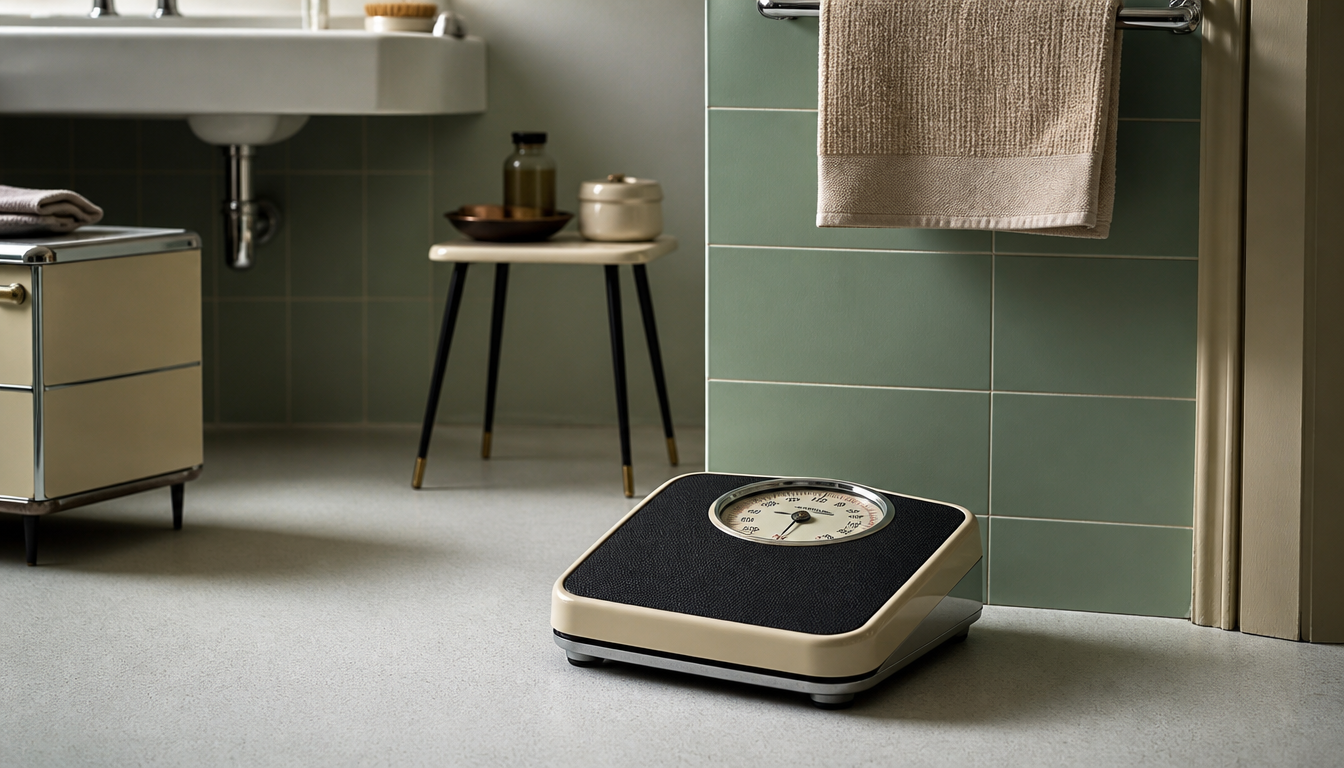
Soehnle shaped the design of functional bathroom objects in Germany from the 1950s through the 1970s, transforming the bathroom scale from a mere measuring device into a design statement for everyday living spaces. Anyone who collects sneakers knows: everyday objects tell the story of design history. The Soehnle scales of those decades embody the same functionalism that shaped classic athletic shoes. Form follows function, color creates attitude. Understanding how post-war bathroom objects were designed lets you read vintage design with a whole new perspective.
Soehnle and Functionalism in the Bathroom: Why Design Objects from the 1950s to 1970s Still Fascinate Today
In the post-war decades, the bathroom scale was not a plain household appliance but a purposefully designed object with a clear attitude: form follows function — and with style.
The Key Fact
German manufacturers like Soehnle began developing bathroom scales in the 1950s that brought the spirit of functionalism directly into the bathroom. Flat housings, legible dials, neutral colours, no superfluous frills. This design philosophy was no accident: it emerged from schools and design movements that understood everyday objects as cultural statements. The scale didn’t simply sit on the floor — it communicated an attitude towards modernity.
What stood in bathrooms back then is today a collector’s and design object. And for good reason.
4 Practical Takeaways
1. Look Closely at What an Object Says About Its Time
Measuring objects like bathroom scales were deliberately designed as functional design pieces in this era. The dial was legible, the material easy to clean, the silhouette understated. This sets them apart from decorative knick-knacks. If you come across a piece from the 1950s to 1970s today, it’s worth researching the manufacturer, year of production, and choice of materials before buying or setting it aside.
2. Vintage Design in the Home Doesn’t Have to Look Like a Museum
You can also revive the spirit of this era with modern products that follow the same design principles. A clear geometric print on the wall, a clean pattern on a cushion, a reduced formal language in the furnishings. The Bauhaus-style decorative cushion or the Bauhaus Hexagon picture draw on exactly this aesthetic: clear, functional, timelessly beautiful.
3. Functionalism Doesn’t Mean Boredom
Soehnle scales often had a single distinctive feature that made them recognisable. A coloured pointer, an unusual dial shape, a slightly curved housing. This very attitude — reduction with one single deliberate accent — is something you can apply to your own interior as well. The abstract retro cushion or the geo retro cushion follow exactly this principle.
4. Knowing Design History Makes You a Better Buyer
Understanding why an object looks the way it does leads to better decisions when furnishing your home. This applies to flea markets just as much as to online shops. Take a look at the Patent Drawing Stethoscope or the Patent Drawing Coffee Roasting Drum: the same fascination with the drawn function of an object is at work there too. Design as document.
More from the reetro Universe
Feeling inspired by vintage aesthetics for your home? In the reetro shop you’ll find posters, canvases, hexagon wall art and cushions featuring motifs that breathe the spirit of these decades. Shipping information is available here.
Sources
As the linked source documents for this subject area did not provide accessible specialist information on Soehnle or the design history of measuring objects, no specific facts from these sources were incorporated. The design principles mentioned in the article refer to the generally documented functionalism of the post-war period, which could not be further substantiated in the sources provided.
- Design Research Society Conference Papers
- Oxford University Research Archive
- Natural Hazards Journal via USM
FAQ
When did Soehnle actually start making bathroom scales for home use?
Soehnle was founded in 1868 in Württemberg and originally specialised in precision scales. The classic bathroom scale for home use became established in the brand’s range primarily in the 1950s, as the bathroom became a permanent, purposefully designed room in German households and the desire for functional everyday design grew.
What makes the design of Soehnle scales from the 1950s to 1970s so special?
The devices of these decades clearly follow functionalism: no superfluous ornamentation, rounded housing shapes, mostly kept in white or pastel tones. The dials are large and clearly legible, and the housing is made from robust plastic or sheet steel. This formal language reflects the zeitgeist of the post-war economic boom era, in which everyday objects were expected to be both practical and suitable for the living space.
How did the measuring mechanism of the analogue Soehnle scales of this period work?
The classic Soehnle bathroom scales of the post-war decades operated on a mechanical spring principle. Body weight compressed a steel leaf spring, whose deflection was transferred to the pointer via a lever mechanism. This principle was robust, low-maintenance, and required no electricity, making it ideal for daily use in the bathroom.
Are Soehnle scales from the 1960s still worth collecting today?
Absolutely. Well-preserved examples from the 1960s are considered sought-after everyday objects in vintage and design circles. Their reduced forms, authentic pastel colours, and solid craftsmanship make them fascinating witnesses to West German industrial design. Many pieces can still be calibrated and function perfectly, which further adds to their appeal as usable objects.
How does Soehnle fit into the broader design history of measuring objects?
Measuring objects such as scales, thermometers, and clocks are regarded in design history as early examples of the union between precision and form. Soehnle represents the German approach of translating industrial function into the private household. Much like Braun products of the same era, the design was oriented towards clarity and honesty of form — which today secures these devices a firm place in discussions of functionalist everyday design.
This article was generated automatically by an AI system. Disclosure pursuant to Article 50 of the EU AI Act.