
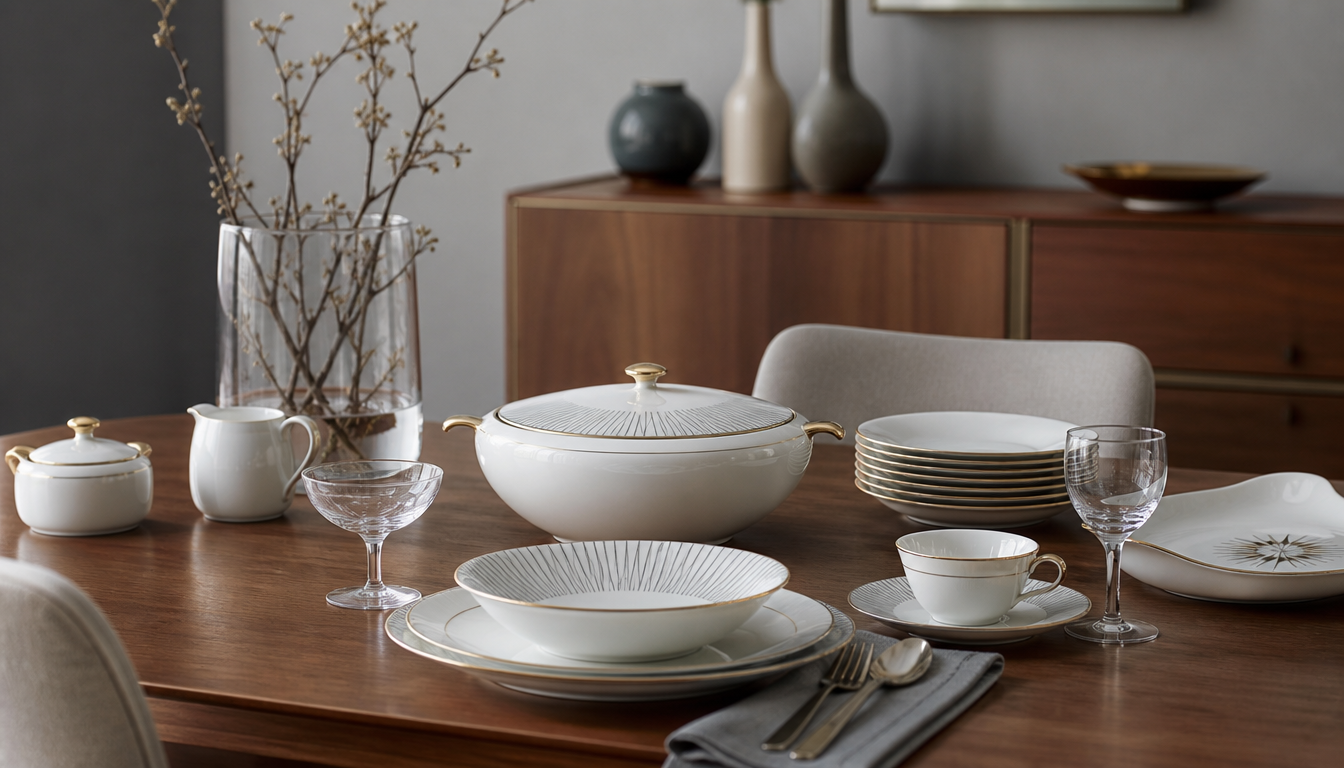
Since 1879, Rosenthal has been setting standards in table culture: The dinnerware collections of the 1950s and 1960s in particular combined a straight-lined functionalist aesthetic with sophisticated porcelain design, laying the foundation for collections that continue to receive numerous awards to this day. Anyone who discovers vintage Rosenthal dinnerware from the fifties and sixties today holds a piece of German cultural heritage in their hands. The pieces from this era represent a time when dining meant more than just eating: it was an attitude. And because even a single hairline crack on a Rosenthal figurine can reduce its resale value by more than half, it’s worth taking a close look at the next flea market find and checking the factory stamp on the bottom. True connoisseurs know: the mark on the base tells the whole story.
Rosenthal in the 1950s and 1960s: When the Set Table Became a Question of Design
Since its founding in 1879, Rosenthal has stood for porcelain design that, according to the company itself, “became a piece of German cultural heritage through its consistently high standards of form and function.” It was precisely in the decades following the Second World War — the 1950s and 1960s — that this aspiration crystallised into a genuine design moment: functionalism met elegance, and the dining table became a stage.
What Makes the Postwar Decades So Special
The design language Rosenthal established during these years was no coincidence. According to company history, Rosenthal engaged renowned designers and worked closely with the design tradition of the Bauhaus. Walter Gropius had founded the Staatliche Bauhaus as early as 1919, and from 1963 onwards these design principles flowed directly into Rosenthal collections. The clean-lined elegance and simple forms that still characterise the range today have their roots in precisely this era.
The result: table and coffee services that were neither playfully overloaded nor coldly functional, but held both qualities in balance.
4 Practical Tips When Hunting for Rosenthal Pieces from This Period
1. Check the maker’s mark on the base Rosenthal has changed its base marks several times since 1879. Anyone wanting to identify a piece from the 1950s or 1960s must, according to the Rosenthal Porcelain Value Guide, know exactly which stamp to look for. The mark reveals era and provenance more reliably than any description.
2. Look for hairline cracks before you buy or sell A single hairline crack on a Rosenthal figurine can reduce its resale value by more than half, according to Lion & Unicorn Auction House. The same applies to dinnerware: minor flaws have a major impact on market price.
3. Search specifically for well-known designs According to the Value Guide, collectors pay significantly more for pieces with a clear designer signature or for iconic patterns such as “Maria”. Pieces from the Bauhaus-influenced phase of the 1960s are among the more sought-after categories today.
4. Create context at the table Anyone who owns or displays Rosenthal dinnerware from this era can enhance the look with a fitting vintage setting. A Bauhaus poster on the wall or a Kandinsky print reflect exactly the design language from which Rosenthal also drew during this period. Those who prefer to work with textiles will find a decorative cushion in Bauhaus style a harmonious addition. More vintage wall décor is available in the reetro Shop.
Rosenthal and Versace: How One Era Reaches into the Present
The design principles established in the 1950s and 1960s continue to resonate today. In 2023, Rosenthal and Versace celebrated the 30th anniversary of their collaboration, which according to Rosenthal’s company history has resulted in “a wide range of the finest porcelain collections.” The starting point for this journey lies clearly in the postwar modernist era.
Sources
- Buy Rosenthal online – Porzellantreff
- Rosenthal Porcelain Value Guide: Marks and Worth – Lion & Unicorn
- Rosenthal History & Heritage Since 1879
FAQ
When was Rosenthal founded and why is the brand considered part of Germany's cultural heritage?
Rosenthal was founded in 1879 and has consistently upheld high standards of form and function ever since. The collections have received numerous awards and prizes. This commitment, combined with the involvement of renowned designers, made Rosenthal a piece of German cultural heritage that is well known far beyond the domestic market.
What makes the design of Rosenthal dinnerware from the 1950s and 1960s so special?
During this era, clean-lined elegance and simple forms took centre stage, very much in the spirit of functionalism. At the same time, the designs had a high aesthetic value: from traditional table services to contemporary coffee services, Rosenthal offered designs that united function and beauty. No two pieces looked alike, as each design stands out with its own unique character.
What role does condition play in the collectible value of Rosenthal porcelain from this period?
Condition is crucial. Even a single hairline crack on a Rosenthal figurine can reduce its resale value by more than half. Anyone who owns pieces from the 1950s and 1960s or is looking to buy them should therefore examine them very carefully for chips and cracks before a price is agreed.
How can I tell which period my Rosenthal piece is from?
The most reliable method is to look at the stamp on the underside of the piece. The factory logo has changed several times since the company was founded in 1879. These marks can be used to narrow down when a piece was made. For collectors, knowing these marks is the best way to determine the age and value of their pieces.
Is it still worth buying Rosenthal dinnerware from the 1950s and 1960s today?
Absolutely, if you value quality and design history. Even back then, Rosenthal complemented its dinnerware range with high-quality glass collections, vases and table accessories, making the pieces ideal for cohesive ensembles. Well-known designs such as “Maria” continue to command high prices among collectors. The decisive factors are condition, a recognisable design and the maker’s marks on the base.
This article was generated automatically by an AI system. Disclosure pursuant to Article 50 of the EU AI Act.