
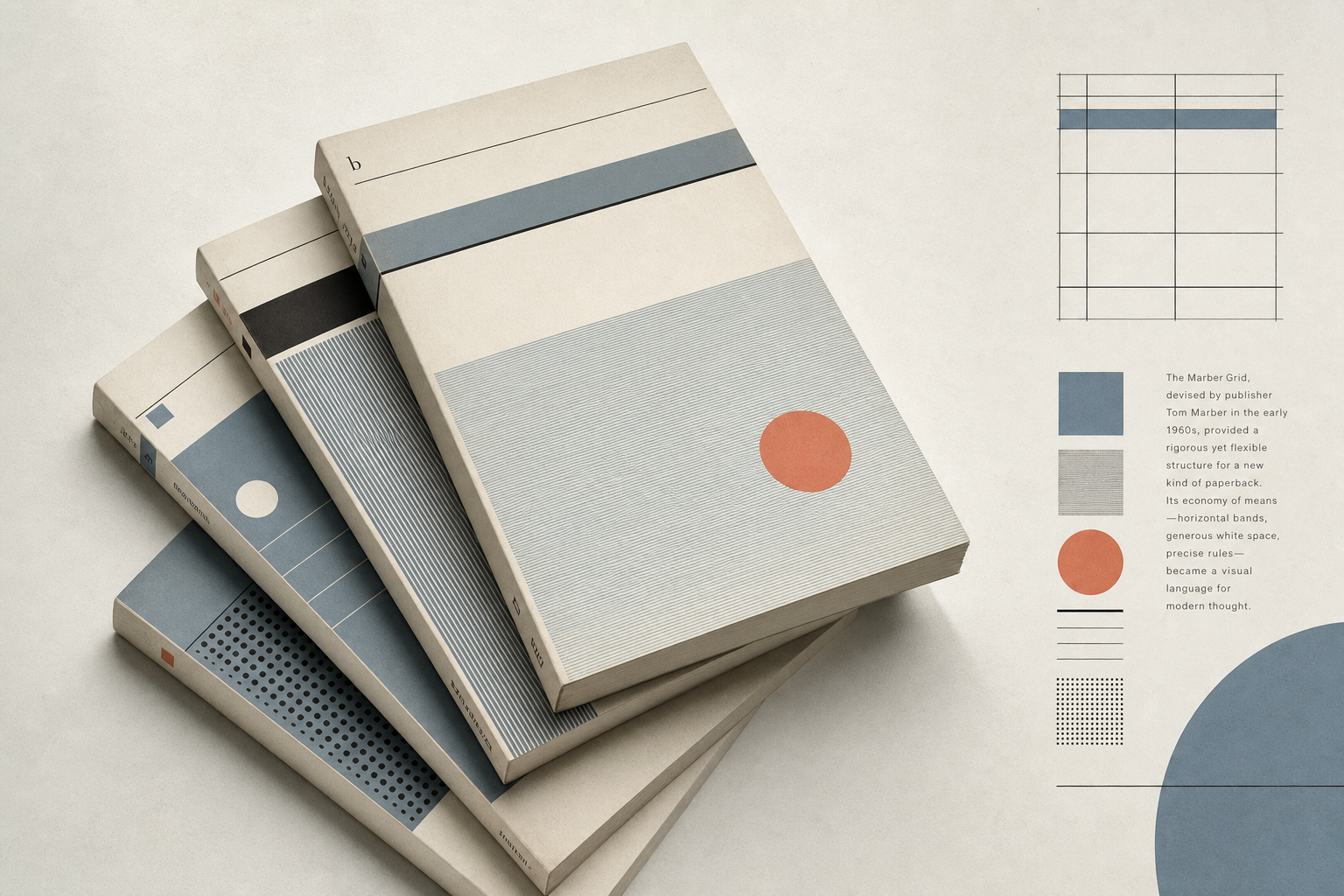
Some printed objects do not depend on a single famous cover, but on their ability to organize many different books into one recognizable family. That is exactly what makes Penguin Modern Classics so compelling. Penguin notes that in April 1961 four titles appeared with a new name and a new look. From the start, then, the series was not only a publishing move but a visible design proposition.
A series launch with a clear attitude
Penguin describes the early Modern Classics selection as “bold, confident and international.” That is more than publicity language. For a printed object, it means editorial choice and visual form were meant to be read together: not simply important texts in paperback, but a series with its own tone shaped through typography, colour, and repetition. What feels especially relevant to Reetro is that mix of literary weight and graphic economy.
Why 1963 mattered so much
According to Penguin, the series found its decisive refinement in October 1963. Art Director Germano Facetti kept the bluish-grey scheme of Hans Schmoller’s earlier design, but reset the covers using the Marber Grid. The same source stresses that the grid was cleaner and allowed more space for artwork. That is the key historical point: rather than inventing an entirely different face, Penguin made an existing one more disciplined and more spacious.
A grid that came out of the crime line
The supporting sources on Romek Marber show why this system was so durable. The V&A describes Marber as the creator of the distinctive Marber Grid and notes that he illustrated around 100 covers for Penguin Crime and other series. Marber’s own project page adds that, after an open competition, Tony Godwin and Germano Facetti brought him in to revitalize the Penguin Crime covers. The grid, in other words, was born from a serial design problem and then migrated into other parts of the publisher’s list.
Why it works so well for Penguin Modern Classics
Modern Classics shows the advantage of that system especially clearly. Penguin states that the line adopted the Marber Grid in 1963; Marber’s archive material shows the layout later rolling out across other Penguin series as well. That is what makes the covers so interesting: they balance standardization and individuality. Each book remains legible as its own object, yet the series still reads as one coherent shelf image.
Why it fits Reetro
What feels especially relevant for Reetro is how quietly these printed objects work. A restrained colour, a clear typographic band, an image area with room to breathe — and suddenly the cover has real presence. If you respond to that kind of controlled calm, it often leads to large-format posters or precisely staged framed pieces that do not need to shout in order to hold a wall. Penguin Modern Classics shows how lasting a series can feel when order and openness are kept in the right proportion.