
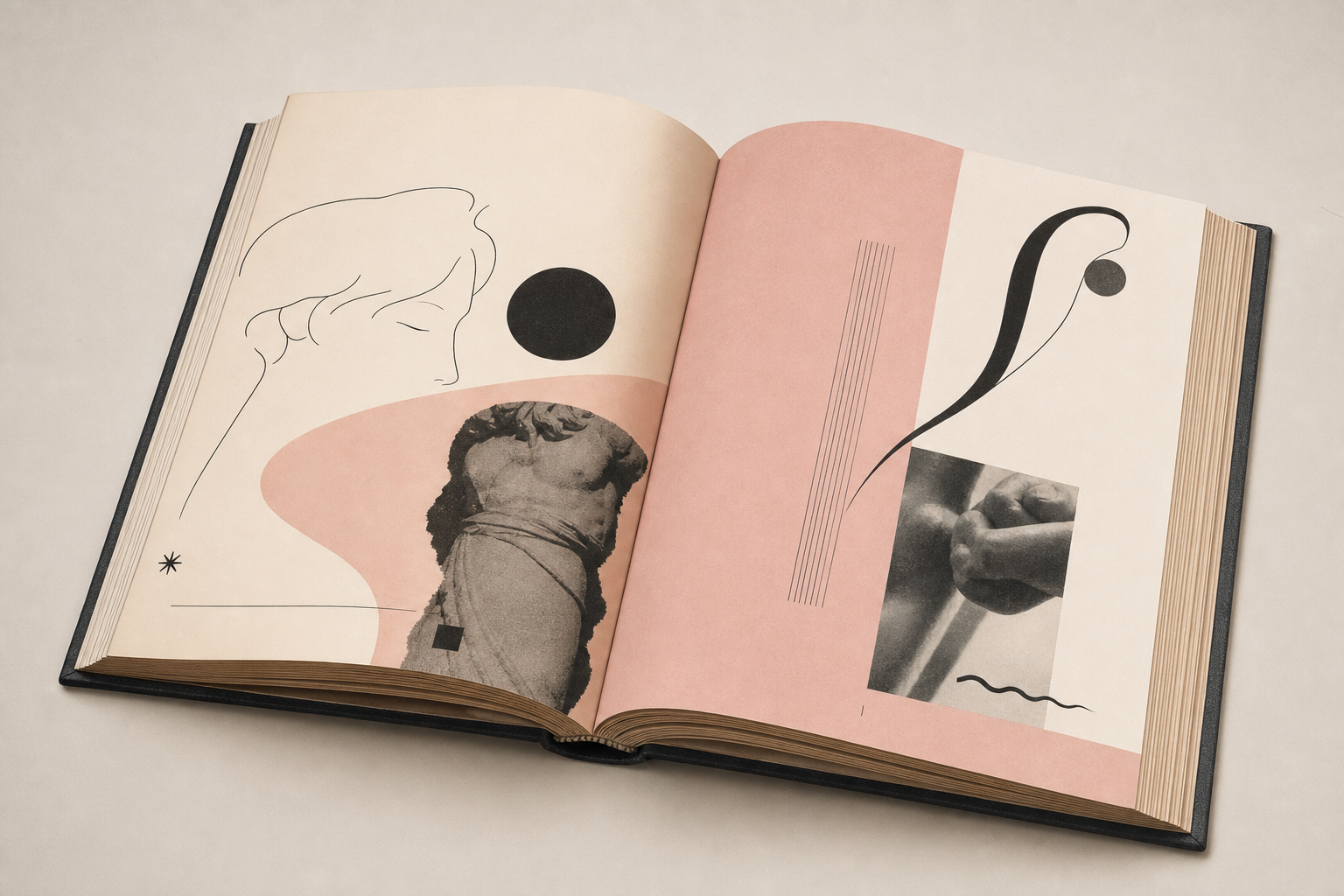
Eros matters because it reads less like a casual periodical than like a deliberately staged printed object. The University of Pennsylvania describes it as an American magazine of erotic literature published by Ralph Ginzburg and art directed by Herb Lubalin. The same page also notes that Eros published only four issues in 1962. That short run gives the project an unusually crisp outline today.
A quarterly magazine with clear roles
Several sources describe the collaboration in very direct terms. UPenn lists Ralph Ginzburg as publisher and Herb Lubalin as art director. Open Culture frames it similarly, identifying Ralph Ginzburg as editor and Herb Lubalin as art director. That division matters for Reetro because Eros is not defined by subject matter alone, but by the combination of editorial ambition, image direction, and typographic control.
Hardbound rather than disposable
The magazine was materially different from many periodicals of its moment. In Eye, Steven Heller describes Eros as a quarterly magazine and notes that its form was consistent with other hardbound magazines being published at the time. Design Is History also calls it a hardbound quarterly publication. That is not a minor production detail: the rigid format shifts the object away from the throwaway newsstand magazine and toward something more collectible and self-conscious.
Provocative in theme, controlled in form
The tension inside Eros comes from that contrast. Eye describes the content as revolutionary even while the outer form resembled established high-quality magazines. Open Culture summarizes the project as a quarterly magazine on love and sex in America. Heller also argues that Lubalin used the title as a place to test his design principles. That is why Eros still feels less like empty provocation than like a tightly built editorial object.
Only four issues
The magazine’s short life is well documented. UPenn explicitly records four issues in 1962 and notes that publication ended after Ginzburg was indicted for distributing obscene literature through the mail. Open Culture also states that the indictment came after the fourth issue. Eye adds that the magazine was expensive to produce as well. Together, those points explain why Eros now feels so concentrated: only four issues, but a very clear visual and editorial position.
Why it fits Reetro
For Reetro, what matters in Eros is less the scandal than the material and graphic discipline. A hard cover, generous image areas, exact typography, and a magazine that insists on being understood as an object rather than a simple carrier of information. If that kind of print attitude appeals to you, it often leads to large-format posters or quietly staged framed pieces where paper character and graphic tension do the real work. Eros shows how decisively a magazine can speak when form and subject are treated with equal seriousness.