
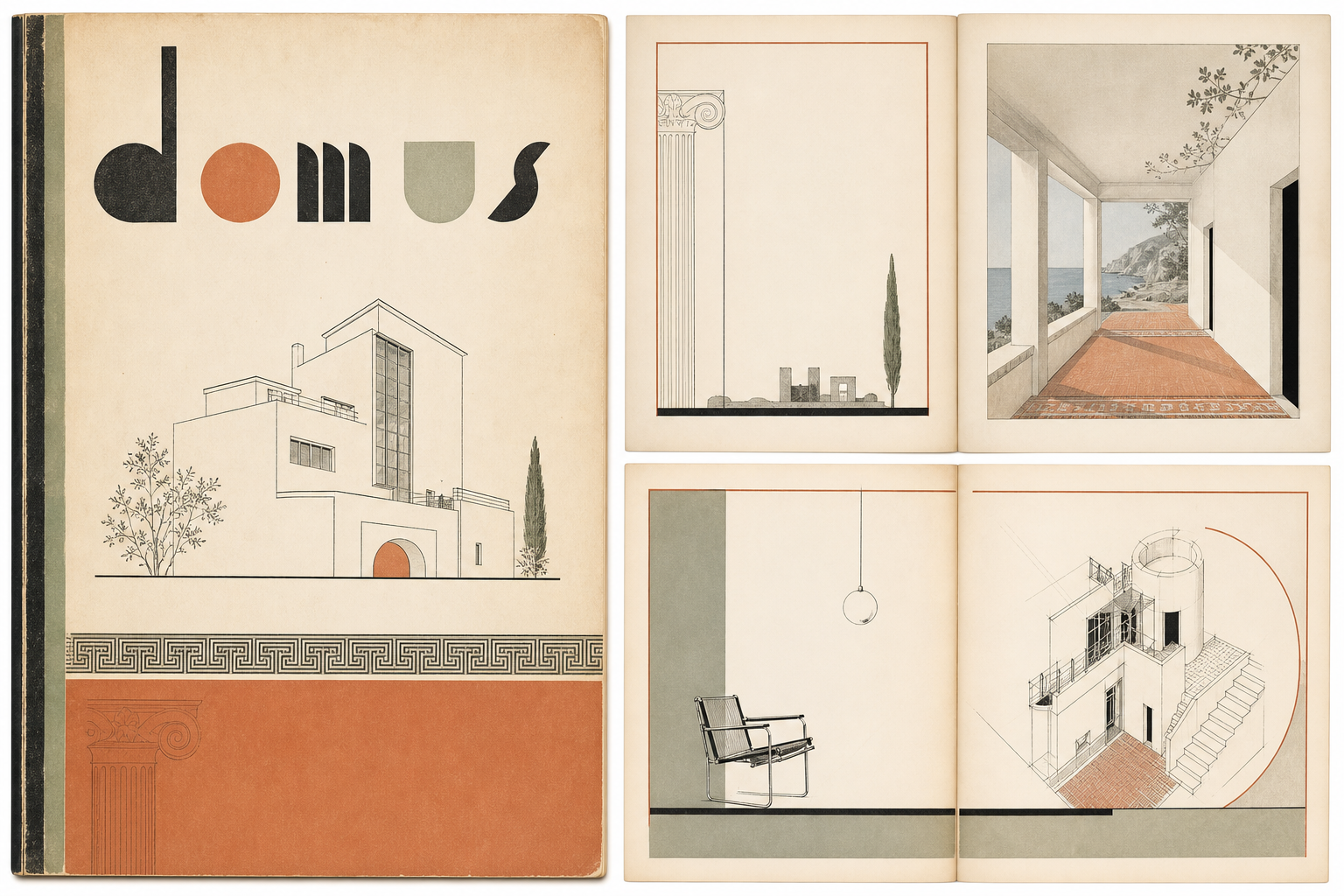
Domus is one of those magazines that makes it easy to see how strongly printed surfaces can shape the idea of modern living. According to Wikipedia, the first issue appeared on January 15, 1928 with the subtitle “Architecture and decor of the modern home in the city and in the country.” That debut issue matters to Reetro not simply as a trade magazine, but as a carefully staged printed object that draws architecture, interiors, and taste into a single publication.
A launch positioned between architecture and everyday life
Wikipedia names Gio Ponti and the Barnabite priest Giovanni Semeria as the founders of Domus. It also describes the early mission clearly: the magazine aimed to renew architecture, interiors, and Italian decorative arts without excluding everyday subjects such as homemaking, gardening, and cooking. That mixture is exactly what makes the first issue feel so legible now. It speaks not only to architects, but to readers learning modern living through images, layout, and printed examples.
Why the 1928 first issue still feels exact
Treccani describes Domus as a monthly magazine of architecture, furnishings, design, and art based in Milan, and notes that under Ponti, from 1928 to 1940, it became an effective instrument for spreading new ideas in architecture and the visual arts. Especially important is Treccani’s point that the magazine helped renew Italian bourgeois taste in a modernist direction, above all in furnishing and decorative arts. That is why issue no. 1 does not read like neutral reporting; it feels like a printed proposal for another domestic culture.
A durable editorial system rather than an isolated issue
The Internet Archive metadata lists Domus as an active architecture and design magazine launched in 1928 and published by Editoriale Domus. In other words, the first issue survives not only as a historical relic, but as the beginning of a long publication line. That continuity matters for the debut: it was not a one-off style test, but the opening move in an editorial system that regularly brought design, the applied arts, and the built environment into the same printed order.
Why it fits Reetro
For Reetro, Domus no. 1 is compelling because it communicates modernity through restraint, selection, and surface rather than volume. Architecture is disciplined here through print, not overdramatized through spectacle. If you respond to that controlled page logic, it often leads to crisp posters or restrained framed art where materiality, white space, and typography matter more than effects. Early Domus is a reminder that a magazine can also function like a piece of furniture for the eye.