Buy a Movie Poster – Curated Designs for Walls and Collections
Anyone looking to buy a movie poster can choose between reprints of classic cinema one-sheets, modern alternative movie posters, and stripped-back minimalist editions. This overview explains which designs suit which interior, which formats and materials are most common, and what to look for in print quality, licensing, and framing.
Why Buy a Movie Poster – Between Cinephilia and Wall Décor
A movie poster is more than a promotional tool. It distils the atmosphere, genre, and visual identity of a film into a single image – which is precisely why it has migrated from cinema lobbies to living room walls for decades. The market divides broadly into three areas: original vintage one-sheets from the 1950s to 1980s, official reprints, and alternative artist editions that reinterpret a film in their own right.
Those who want to buy a movie poster today usually decide not only by favourite film but also by graphic quality. The typography of a Saul Bass design or the silhouettes of a Polish film poster work equally well on the wall even if the film itself is not a personal favourite. The poster becomes an autonomous piece of graphic art.
For many collectors the decorative dimension comes first: a well-chosen design structures a room, introduces a colour accent, and says something about the person who lives there – without ever becoming intrusive.
Styles to Consider When You Buy a Movie Poster
Four categories cover the majority of what is available today. Which one fits depends on interior style and the desired level of recognisability.
Classic Reprints
Faithful reproductions of well-known cinema one-sheets, such as those for Hitchcock, Kubrick, or Tarantino films. Suited to living rooms, home cinemas, and hallways with a traditional visual language.
Alternative Movie Posters
Independent artist interpretations, often issued in limited editions. Reduced colour palettes, screen-print aesthetics, and a focus on a single central image. A good match for modern, graphically driven interiors.
Minimalism & Typography
Posters that show only a title, year, and a single symbol. They work well in rows – for example, three posters from a trilogy side by side – and integrate naturally into Scandinavian-influenced spaces.
Vintage Style & Genre Posters
Westerns, film noir, Italian giallo posters: designs with a distinct patina feel, often in warm tones. They give a library, bar, or study real character.
Formats, Materials and Print Quality
The most common formats for a movie poster are DIN A2 (42 × 59.4 cm) and DIN A1 (59.4 × 84.1 cm). For generously sized walls it is worth stepping up to 70 × 100 cm – the classic French cinema format – or an XXL print up to 100 × 150 cm. Smaller formats from A3 upward work well in gallery arrangements with multiple designs.
In terms of paper, matte premium poster stock from 200 g/m² upward has become the established standard. It does not reflect light, allows blacks to appear deep and rich, and ages with dignity. Anyone who wants to buy a movie poster that will last for decades should also check for FSC certification and pigment-based inks with high lightfastness.
Alternatives to paper posters include canvas prints, which give the design a softer, more painterly quality, as well as aluminium and acrylic glass options for a very sharp, almost digital appearance. Which variant suits best depends on the available light and the style of the room.
A good movie poster works like a still image from the film's memory – not loud, but precise.
Reetro Editorial
Framing and Hanging When You Buy a Movie Poster
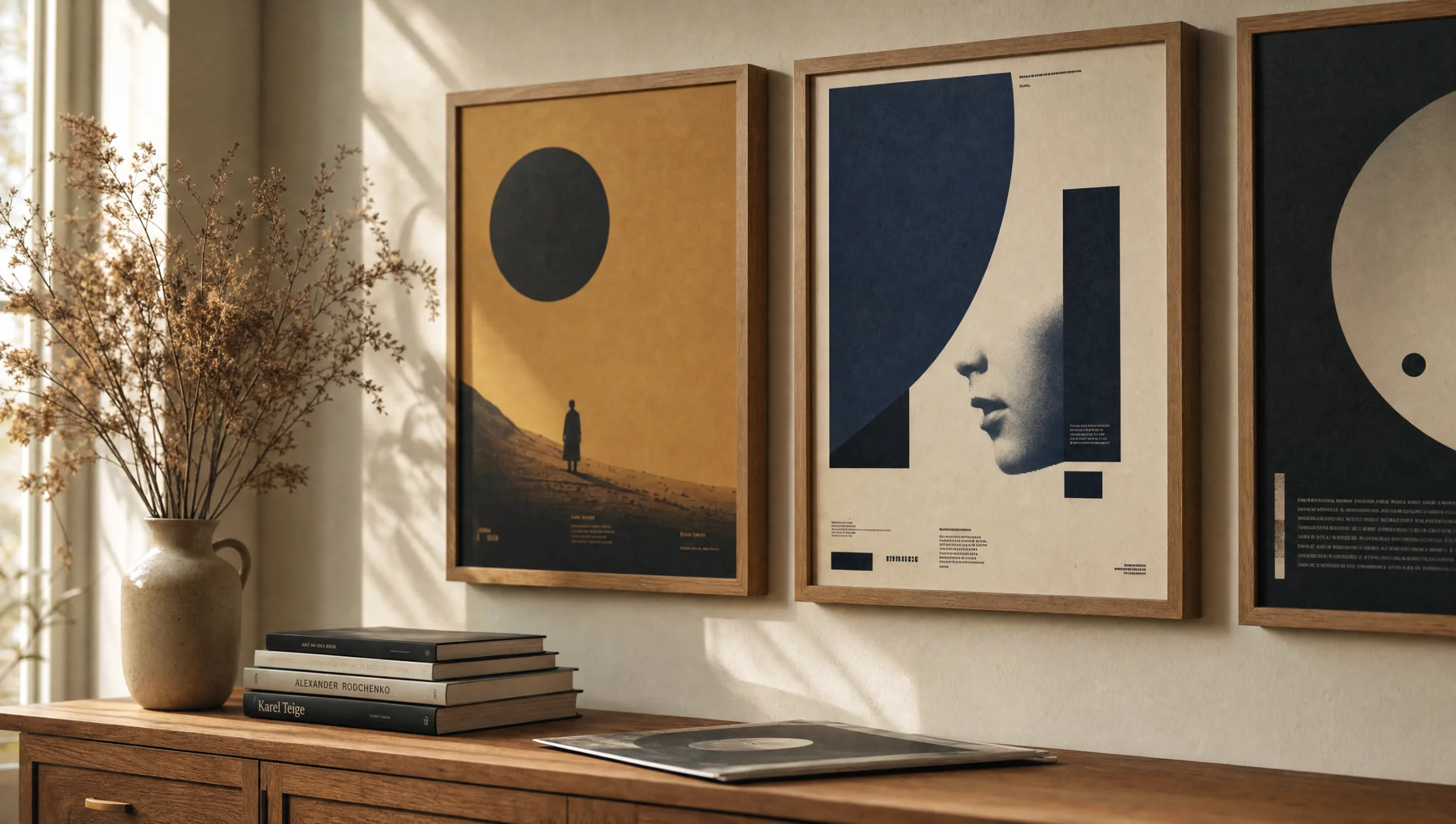
The frame significantly changes the impact of a poster. Plain black wood or aluminium frames keep the design in the foreground and suit almost any style. Natural wood frames soften the graphic character and add warmth – useful for colour-intensive posters in more understated rooms.
A mount of two to four centimetres gives the design visual breathing room and highlights typographic details. For multi-poster arrangements it is advisable to use identical frames and consistent poster sizes; only then does the overall composition read as calm and intentional. Direct sunlight should be avoided to protect the colours over time.
Hanging height: the centre of the image sits ideally at around 145 to 150 cm – eye level for most viewers. Above a sofa, the bottom edge of the frame starts roughly 20 to 30 cm above the backrest.
Licensing, Provenance and What to Look Out For
Not every cheaply listed movie poster is legally above board. Reputable suppliers either hold an official licence, work with public-domain designs, or sell independent artist works that reference a film thematically without reproducing protected graphics. Anyone looking to buy a movie poster should therefore look for clear information about the creator, the printer, and the edition size.
Numbered editions – for example 1/200 through 200/200 – are more collectible and hold their value better than unlimited mass prints. At Reetro, posters are printed to order by our production partner in the EU on FSC-certified paper from 200 g/m² with a matte coating; every design is editorially selected and comes with full details on format, paper, and print process.
Häufige Fragen
-
01
Where can I buy a high-quality movie poster?
High-quality movie posters are available from specialist art-print suppliers, galleries focused on alternative movie posters, and curated brands such as Reetro. Three criteria matter most: matte premium paper from 200 g/m² upward, lightfast pigment-based inks, and clear information about format, edition size, and place of printing. Mass-market platforms often ship on thin paper with limited lightfastness – something that only becomes apparent after months on the wall. Investing in one well-made print tends to give more lasting satisfaction than buying several cheaper posters.
-
02
What size should I choose when I buy a movie poster?
A useful rule of thumb: the poster width should be roughly two thirds of the width of the furniture beneath it. Above a two-seater sofa, a 50 × 70 cm or 70 × 100 cm poster looks balanced; above a dining table or a larger sofa, 70 × 100 cm to 100 × 140 cm tends to work better. For gallery walls with several designs, smaller formats such as A3 or A2 are practical because they are easier to combine into a coherent composition. In narrow hallways, A2 posters hung side by side in portrait orientation are often sufficient.
-
03
Are reprints of movie posters legal?
Official reprints produced with a licence from the rights holder are straightforward. Independent artist interpretations that engage with a film thematically but do not reproduce protected graphic elements, lettering, or photographic material are also legal. Caution is warranted with very inexpensive prints of classic cinema one-sheets when no licensing information is provided. Reputable suppliers document provenance and rights clearly and transparently.
-
04
Paper, canvas or aluminium – what suits a movie poster best?
Paper is the classic choice: matte, precise in print, easy to frame. Canvas has a softer, more painterly quality and suits large-format designs displayed without glass. Aluminium wall prints render colours with great clarity and are robust, but fit graphic-modern designs better than vintage ones. For classic movie posters, matte poster paper with a frame and mount remains the most expressive option in most cases.
-
05
How do I care for a framed movie poster?
Direct sunlight should be avoided, as even lightfast inks can fade over the years. Rooms with high humidity – such as bathrooms – are not ideal. For cleaning, a dry microfibre cloth on the frame glass is sufficient; the poster itself should not be touched. For extra protection, UV-filtering glass is a worthwhile choice.
-
06
What sets a Reetro movie poster apart from other options?
When you buy a movie poster from Reetro, you receive an editorially curated design printed to order by our production partner in the EU on FSC-certified paper from 200 g/m² with a matte coating and pigment-based inks. Every design comes with full details on format, paper, and print process. Rather than an anonymous marketplace, Reetro operates as a curator: the range spans minimalist editions through to large-format XXL posters and complementary premium canvas prints, all printed to order by our production partner in the EU.